
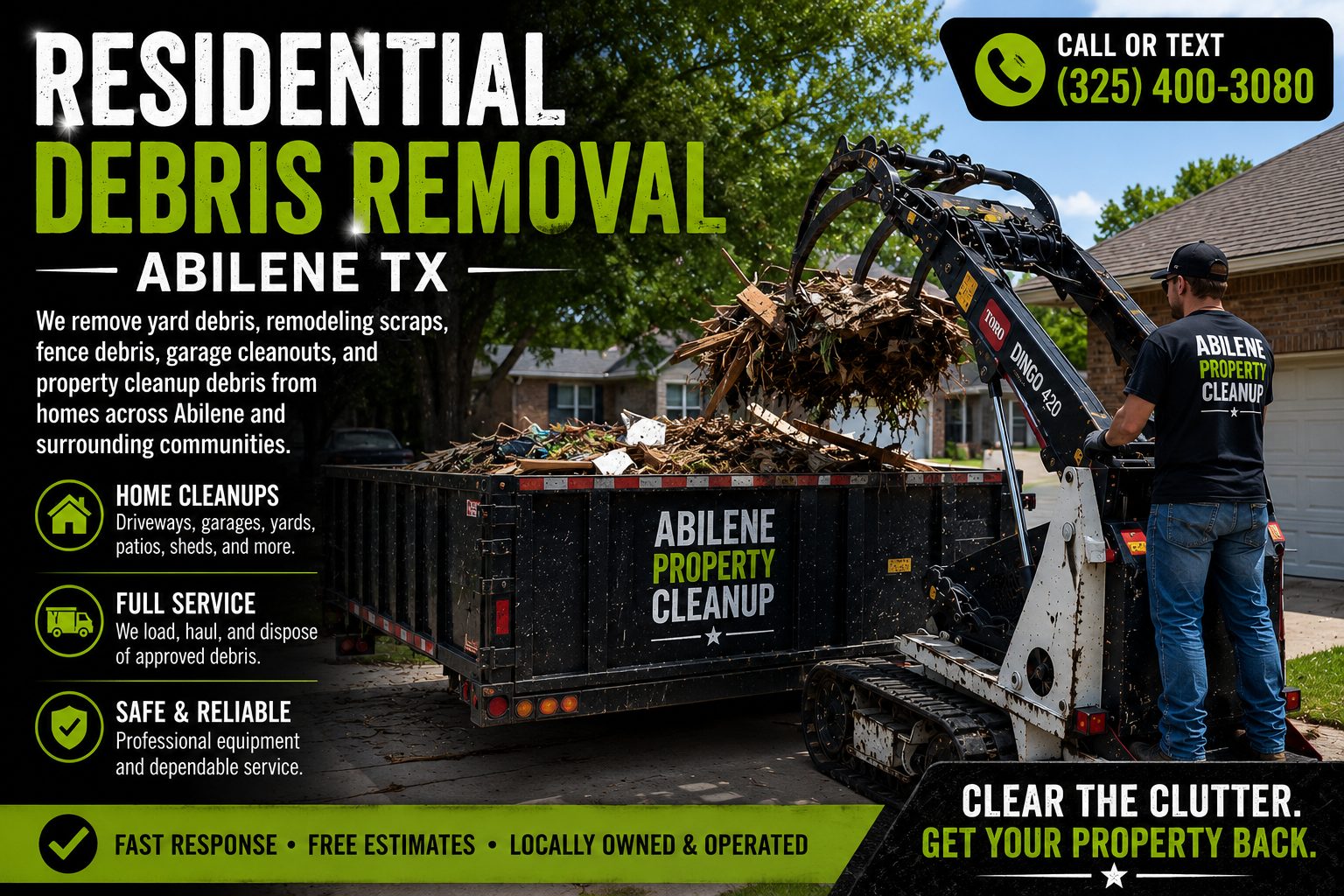
Residential Debris Removal Abilene TX
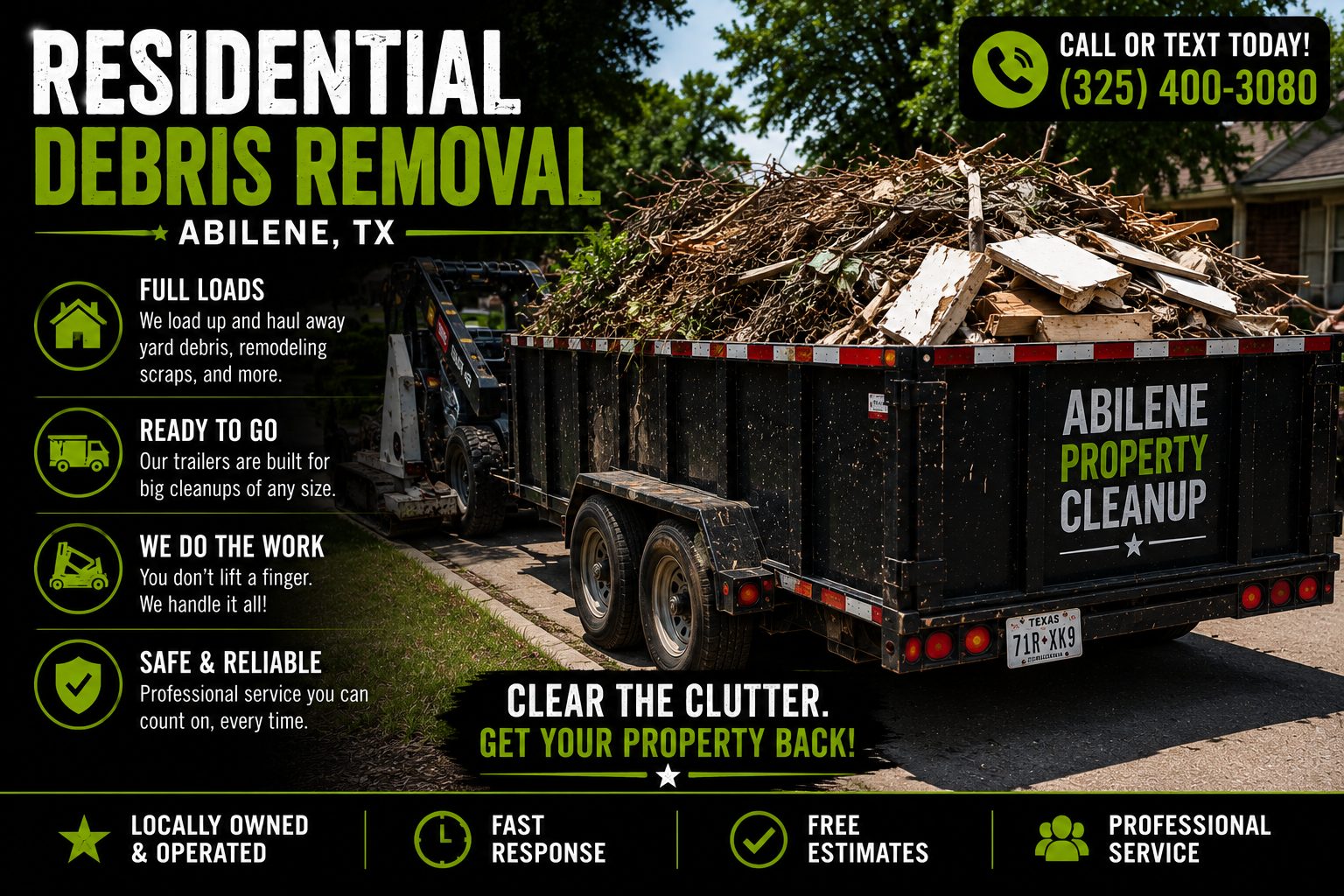
Residential debris removal in Abilene, TX helps homeowners clear accepted non-hazardous materials from yards, garages, driveways, patios, sheds, fence lines, and other accessible ground-level areas. It is useful for spring cleaning, moving, downsizing, home repairs, backyard cleanup, garage cleanouts, estate situations, and property preparation. The service may include loading, hauling, and disposal. Pricing depends on material type, volume, weight, access, labor, travel, and disposal requirements.
Home cleanup projects can create more debris than regular trash service can handle. Wood piles, old fencing, garage debris, remodeling scraps, yard materials, and bulky outdoor items can quickly fill a driveway or take over usable space.
Abilene Property Cleanup provides practical residential debris removal for approved jobs throughout Abilene and nearby Big Country communities. Call or text (325) 400-3080 with photos and a description of the cleanup.
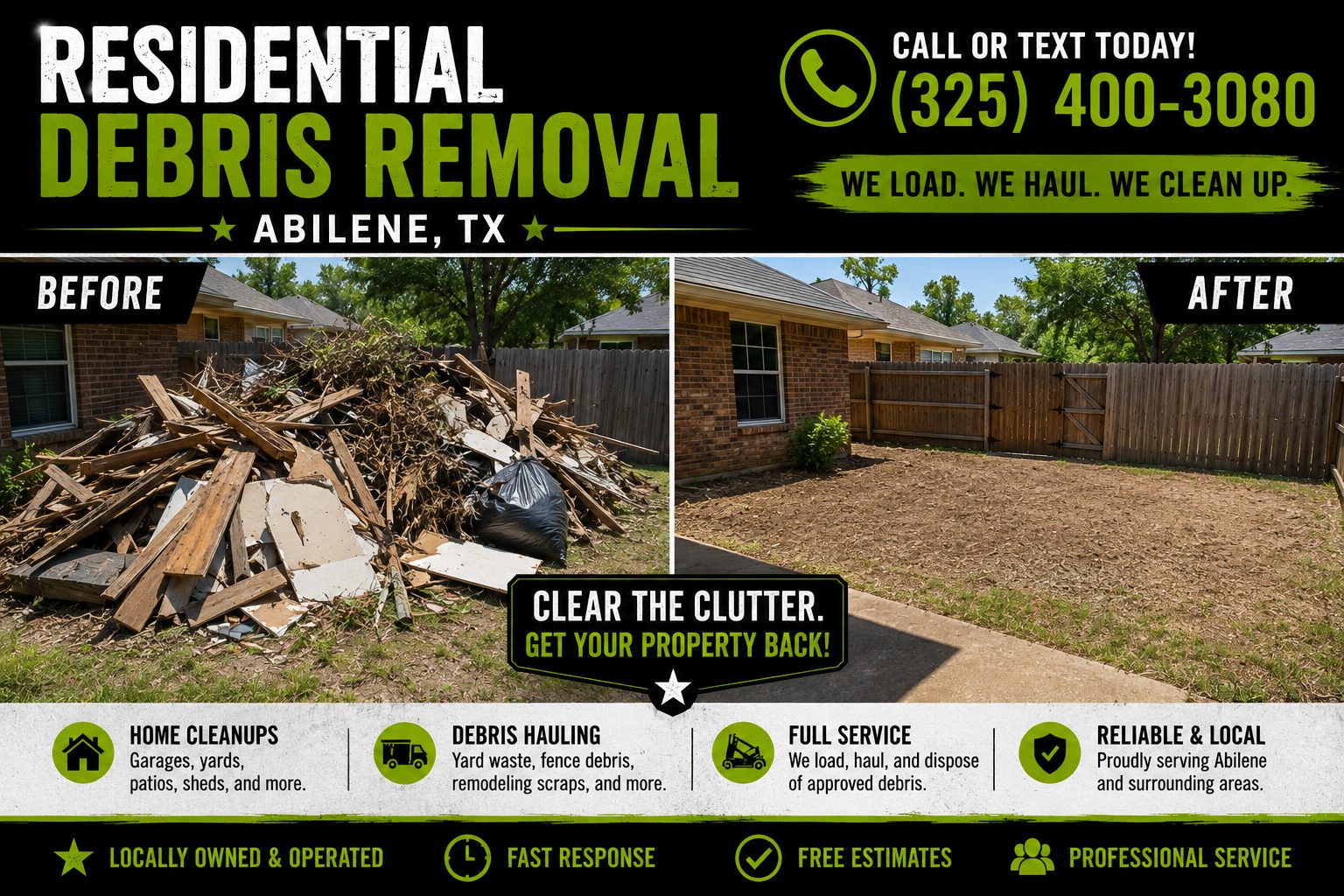
Residential Debris Removal at a Glance
| Best For | Spring cleaning, moving, downsizing, garage cleanup, backyard cleanup, home repairs, and estate situations |
|---|---|
| Typical Materials | Household debris, yard debris, wood piles, old fencing, garage debris, remodeling scraps, and bulky outdoor items |
| Loading | Available for approved debris in accessible ground-level areas |
| Not Included | Hazardous materials, structural demolition, elevated work, and unsafe or restricted loads |
| Pricing | Based on material type, volume, weight, access, labor, travel, and disposal fees |
| Service Area | Abilene and nearby Big Country communities |
Who Uses Residential Debris Removal
| Customer | Common Need | Typical Debris |
|---|---|---|
| Homeowners | Clear yards, garages, patios, and driveways | Mixed household and outdoor debris |
| Families Moving | Remove materials left after packing or downsizing | Garage debris, wood, boxes, bulky items |
| Older Homeowners | Simplify cleanup without repeated disposal trips | Stored property debris and outdoor materials |
| Estate Representatives | Clear residential property after a family transition | Household, garage, shed, and yard debris |
| Landlords | Prepare a house after tenant move-out or repairs | Mixed residential and maintenance debris |
| Home Sellers | Improve appearance before listing or inspection | Yard, garage, patio, and repair debris |
Residential Debris We Commonly Remove
- Household cleanup debris
- Garage and driveway debris
- Yard and patio debris
- Wood piles and lumber scraps
- Old fence boards and manageable fencing material
- Remodeling and repair scraps
- Shed and outdoor storage debris
- Bulky outdoor items
- Non-hazardous mixed residential debris
Heavy materials, appliances, concrete, masonry, unusually large objects, and specialty disposal items require separate evaluation.
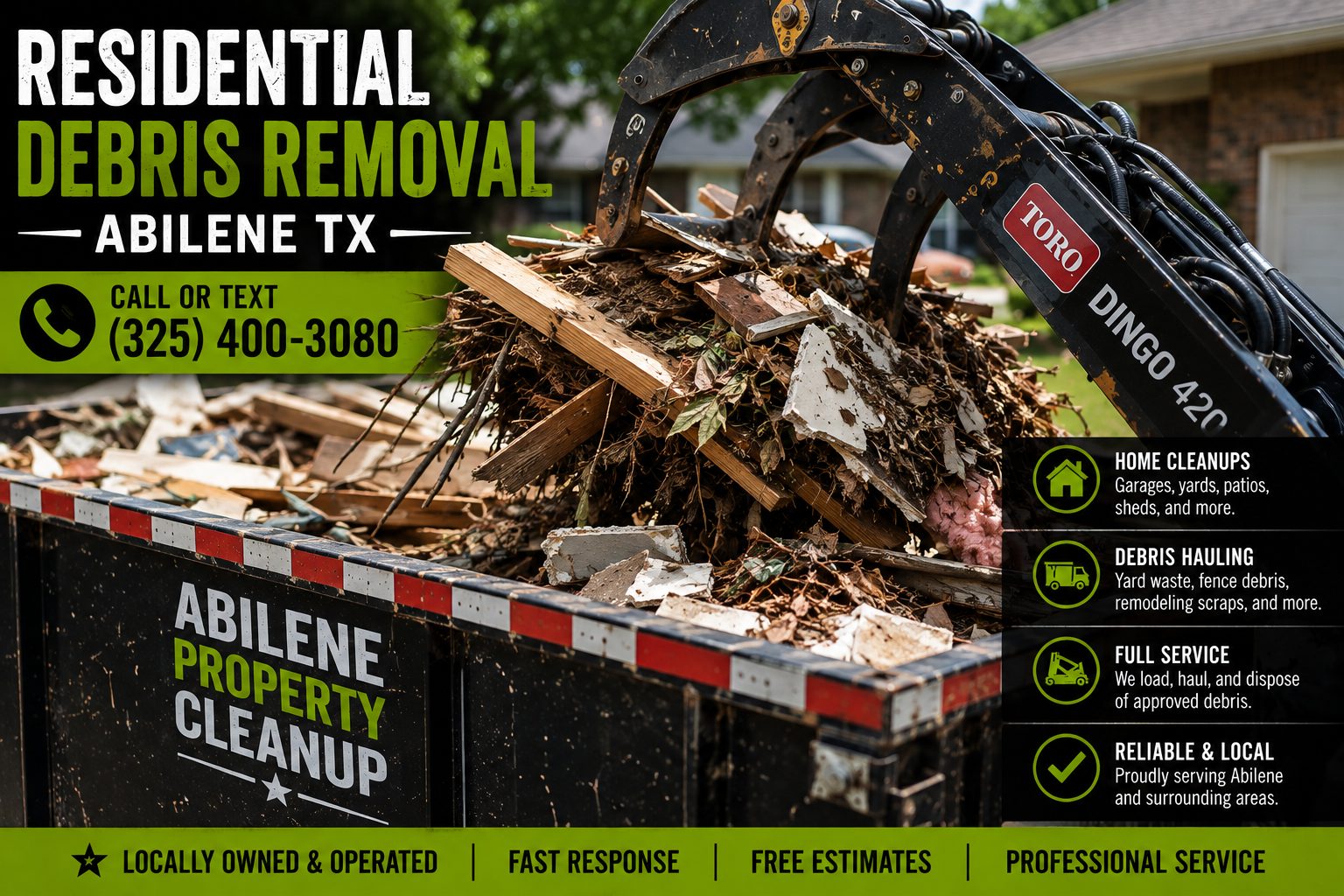
What Is Included
- Photo-based review of the debris and access route
- Evaluation of material type, volume, weight, and loading conditions
- Loading of approved debris from the agreed area
- Securing the load for transport
- Hauling to an appropriate disposal location
- Basic cleanup of the approved pickup area
What Is Not Included
- Structural demolition or active tear-out work
- Roof, ladder, tree-climbing, or elevated removal
- Hazardous or contaminated material handling
- Asbestos testing or removal
- Large-scale industrial cleanup
- Unsafe, inaccessible, or prohibited debris
- Loads that exceed available equipment limits
Common Residential Cleanup Situations
| Situation | Typical Need | Common Debris |
|---|---|---|
| Spring cleaning | Clear accumulated material from indoor and outdoor areas | Garage debris, wood, yard material, bulky items |
| Moving or downsizing | Remove items and debris not going to the new property | Stored debris, boxes, wood, outdoor items |
| Garage cleanup | Restore parking or storage space | Scrap material, broken items, lumber, boxes |
| Backyard cleanup | Clear patios, fence lines, sheds, and yard piles | Wood, fencing, yard debris, outdoor materials |
| Home repairs | Remove debris after maintenance or small updates | Trim, drywall, flooring, wood, packaging |
| Estate cleanup | Clear multiple areas of a residential property | Household, garage, yard, and storage debris |
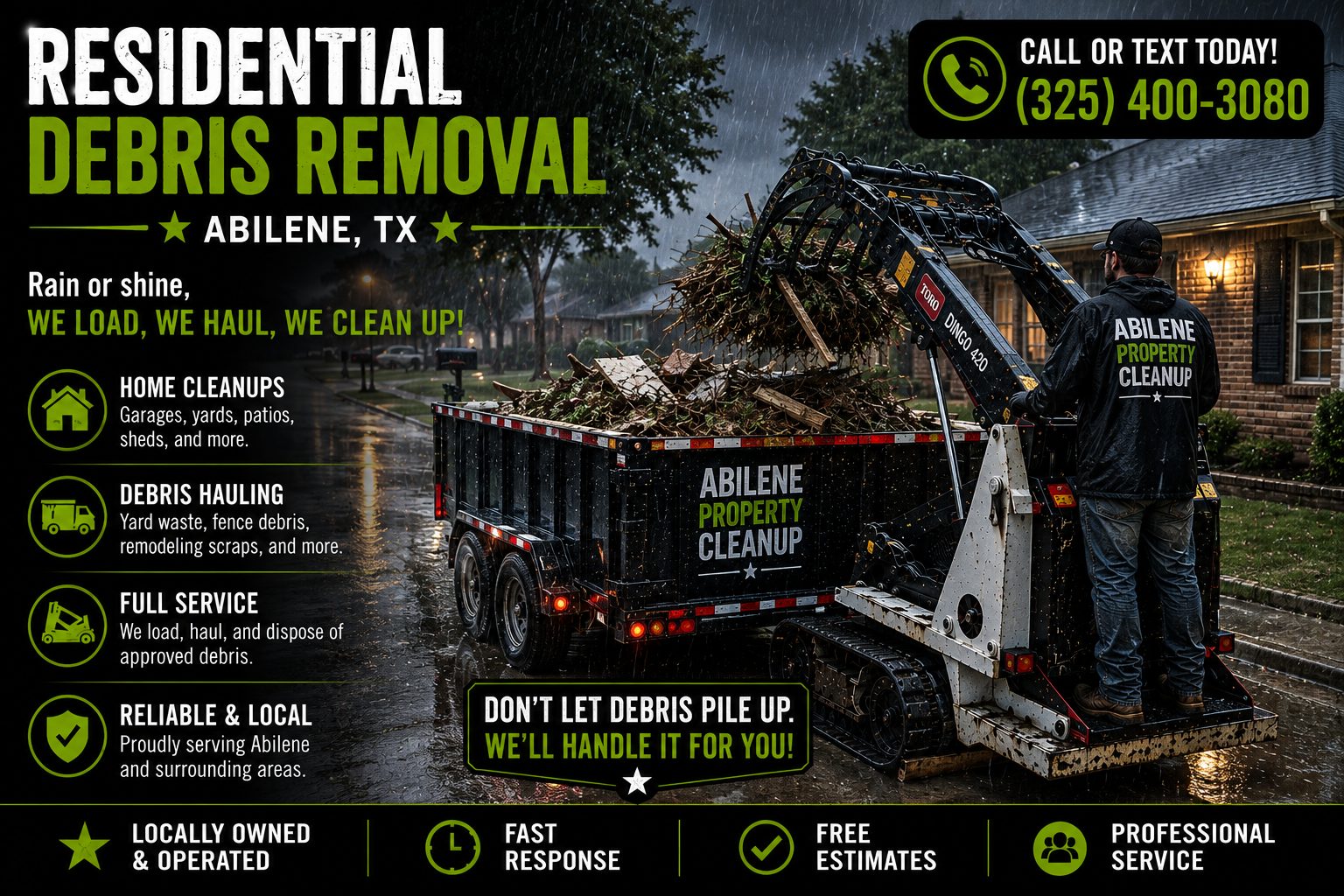
How the Residential Debris Removal Process Works
- Send photos and details. Show the debris, approximate amount, access route, and any obstacles.
- Confirm the job is a fit. We review materials, volume, weight, access, location, and disposal requirements.
- Prepare the pickup area. Group similar materials, bag loose debris, remove hazardous items, and clear pathways.
- Choose a service time. Scheduling depends on route availability, job size, weather, and disposal hours.
- Load approved debris. Materials are loaded from the agreed ground-level area.
- Haul and dispose. The load is secured and taken to an appropriate facility.
Residential Debris Preparation Checklist
| Preparation Step | Why It Matters |
|---|---|
| Group debris in one accessible area | Improves estimate accuracy and loading efficiency |
| Bag or box loose small debris | Reduces scattering and handling time |
| Separate heavy materials | Helps evaluate capacity and disposal requirements |
| Remove chemicals and hazardous items | Prevents rejected loads |
| Clear driveways, gates, and pathways | Creates safer loading access |
| Keep pets and children away from the work area | Improves job-site safety |
| Send updated photos if the pile changes | Keeps pricing and scheduling accurate |
Residential Debris Removal Pricing Factors
Pricing is based on the actual materials and work involved rather than one flat rate. Important factors include:
- Material type and disposal requirements
- Total volume and trailer space needed
- Total weight of mixed or heavy materials
- Access, carrying distance, gates, slopes, and ground conditions
- Preparation—organized debris is usually faster to load
- Labor, travel, equipment, and disposal fees
Clear photos from several angles usually provide the best starting point for an initial estimate.
Small Residential Cleanup vs Larger Property Cleanup
| Project Type | Typical Condition | Main Planning Concern |
|---|---|---|
| Small cleanup | One organized pile in a garage, yard, or driveway | Volume and access |
| Mixed home cleanup | Several debris types from repairs or decluttering | Sorting and disposal rules |
| Large residential cleanup | Multiple rooms, garage, shed, and yard areas | Load count and scheduling |
| Heavy-material cleanup | Concrete, tile, stone, or dense debris | Weight limits and safe handling |
DIY Residential Disposal vs Professional Removal
| Consideration | DIY Disposal | Professional Removal |
|---|---|---|
| Loading | You handle every pile and item | Loading is available for approved debris |
| Vehicle | Requires a truck or trailer | Hauling equipment is provided |
| Sorting | You identify restricted and heavy materials | Materials are reviewed before scheduling |
| Disposal | You locate and visit the proper facility | Accepted debris is transported for disposal |
| Time | May require several trips or weekends | Handled through a coordinated service appointment |
| Best Fit | Small, light, easy-to-transport loads | Larger, mixed, bulky, or time-consuming home cleanups |
Why This Service Saves Time
Residential cleanup can involve sorting, bagging, carrying, loading, securing, transporting, unloading, and making repeated trips to disposal facilities. This can turn a simple weekend project into several days of work.
Professional removal combines evaluation, loading, hauling, and disposal into one coordinated service. This helps homeowners move forward with repairs, landscaping, moving, downsizing, property sales, and estate responsibilities.
Common Residential Debris Removal Mistakes
- Mixing hazardous materials into general debris
- Underestimating the weight of concrete, tile, or other dense materials
- Leaving loose debris scattered across several areas
- Blocking gates, driveways, or loading routes
- Adding more material after receiving an estimate
- Waiting until immediately before a move, inspection, or closing
- Failing to mention stairs, narrow gates, mud, or long carrying distances
- Assuming demolition or repair work is included
Residential Debris Removal vs Related Services
| Service | Best For | Key Difference |
|---|---|---|
| Residential Debris Removal | Home, yard, garage, patio, shed, and repair debris | Focused specifically on homeowner cleanup situations |
| General Debris Removal | Mixed debris from several property types | Broader debris service intent |
| Bulk Debris Removal | Large piles and multi-load cleanup projects | Focused on higher volume |
| Junk Removal | Furniture, appliances, household goods, and personal property | Focused more on unwanted items than cleanup debris |
| Renovation Debris Removal | Kitchen, bathroom, flooring, and interior updates | Focused on renovation-generated materials |
Residential Debris Removal Across Abilene and the Big Country
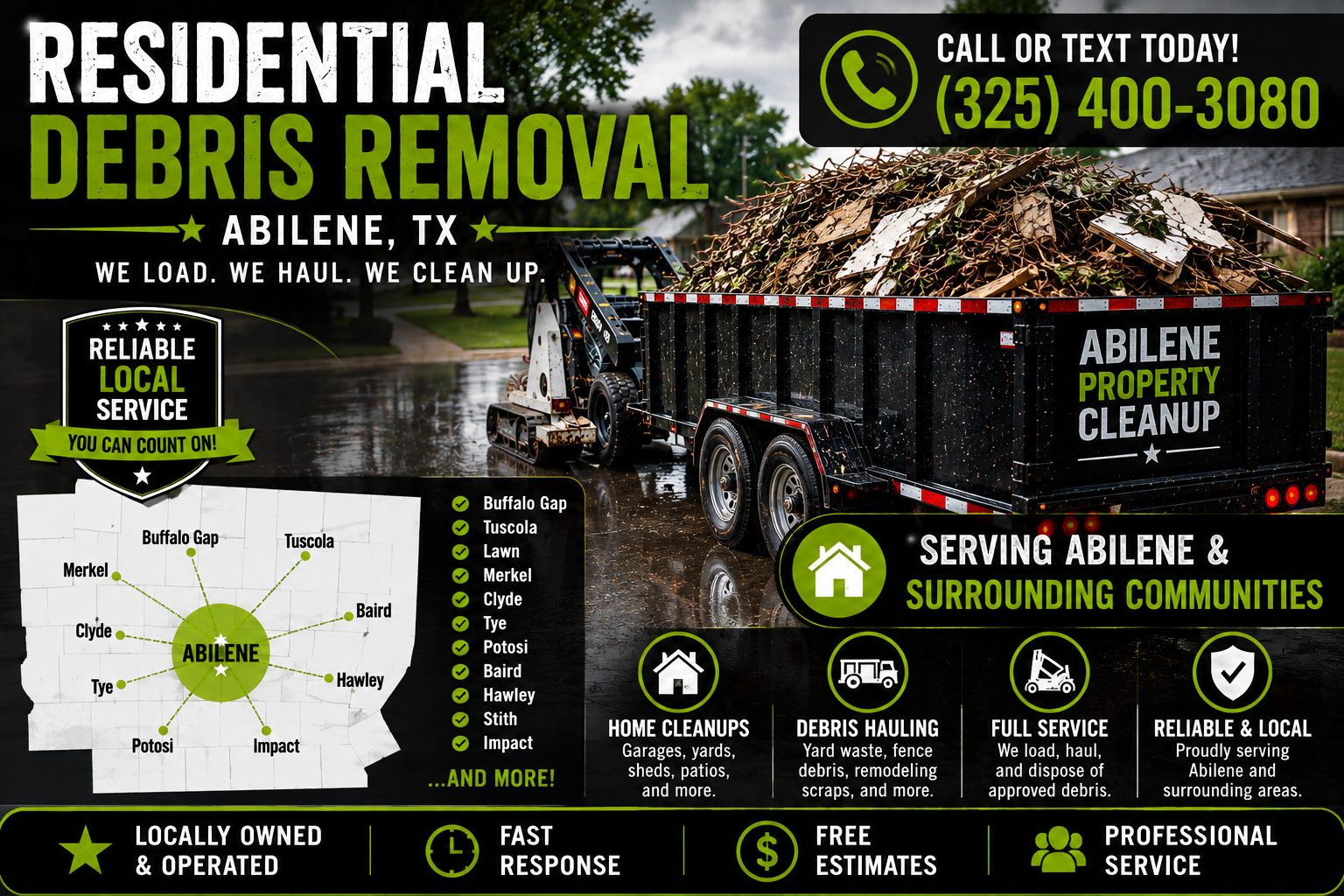
Residential debris removal is available throughout Abilene, including homes near South 14th Street, Buffalo Gap Road, Antilley Road, Sayles Boulevard, Ambler Avenue, Judge Ely Boulevard, North 1st Street, South 1st Street, Loop 322, Highway 277, Winters Freeway, and I-20.
Nearby availability may include Tye, Potosi, Buffalo Gap, Clyde, Merkel, Tuscola, Baird, Hawley, Taylor County, and surrounding Big Country communities. Availability outside Abilene depends on load size, travel distance, route, and disposal requirements.
Why Choose Abilene Property Cleanup
- Local service focused on Abilene and nearby communities
- Photo-based evaluation before scheduling
- Clear review of materials, volume, weight, and access
- Ground-level loading for approved debris
- Honest communication about hazardous, oversized, or restricted materials
- Practical cleanup for homeowners, families, landlords, estate representatives, and home sellers
Frequently Asked Questions
What types of residential debris do you remove?
We may remove accepted non-hazardous household, garage, yard, fencing, wood, remodeling, patio, shed, and outdoor cleanup debris. Final acceptance depends on material type, volume, weight, access, site conditions, and disposal rules.
Do you load and haul the debris?
Yes. For approved jobs, the service generally includes loading accessible ground-level debris, securing the load, hauling it away, and taking accepted materials to an appropriate disposal location.
Can you remove debris from a garage?
Yes. Garages are often a good fit when the debris is accessible and there is a clear loading route. Heavy, hazardous, or tightly packed materials may require additional review.
Can you remove debris from a backyard?
Possibly. Backyard jobs depend on gate width, slope, mud, ground conditions, obstacles, carrying distance, and whether the debris can be reached safely from ground level.
Do you remove debris from inside the home?
Interior removal is evaluated case by case. The best-fit projects usually have materials staged in a garage, driveway, yard, curbside area, or another accessible ground-level location.
How should I prepare residential debris for pickup?
Group similar materials together, bag loose small debris, separate heavy items, remove hazardous materials, clear the loading route, and send updated photos if the pile changes.
How is residential debris removal priced?
Pricing depends on material type, volume, weight, loading distance, access, labor, travel, equipment needs, and disposal fees. Neatly staged debris is usually easier to estimate and load.
Can I get an estimate from photos?
Yes. Send wide photos showing the full pile, close photos of the materials, and pictures of the access route. Include measurements or several angles when the cleanup covers more than one area.
Do you offer same-day residential debris removal?
Same-day service is not guaranteed. Scheduling depends on route capacity, job size, weather, disposal hours, access, and how early the request is received.
What materials are not accepted?
We do not accept asbestos, chemicals, solvents, fuel, medical waste, explosives, pressurized containers, unknown liquids, contaminated debris, hazardous materials, or items prohibited by disposal facilities.
Do you serve areas outside Abilene?
Availability may extend to Tye, Potosi, Buffalo Gap, Clyde, Merkel, Tuscola, Baird, Hawley, and nearby Big Country communities depending on job size, route, and disposal requirements.
What is the difference between residential debris removal and junk removal?
Residential debris removal focuses on cleanup materials from yards, garages, sheds, fencing, repairs, remodeling, and general property maintenance. Junk removal more often focuses on unwanted household goods, furniture, appliances, and personal property.
Schedule Residential Debris Removal in Abilene
Send clear photos of every debris pile, close views of the different materials, and pictures of the loading route. Mention stairs, narrow gates, backyard access, heavy materials, mud, or anything else that may affect the cleanup.
Call or text (325) 400-3080 to find out whether the residential cleanup fits the service and to discuss the next available scheduling option.