

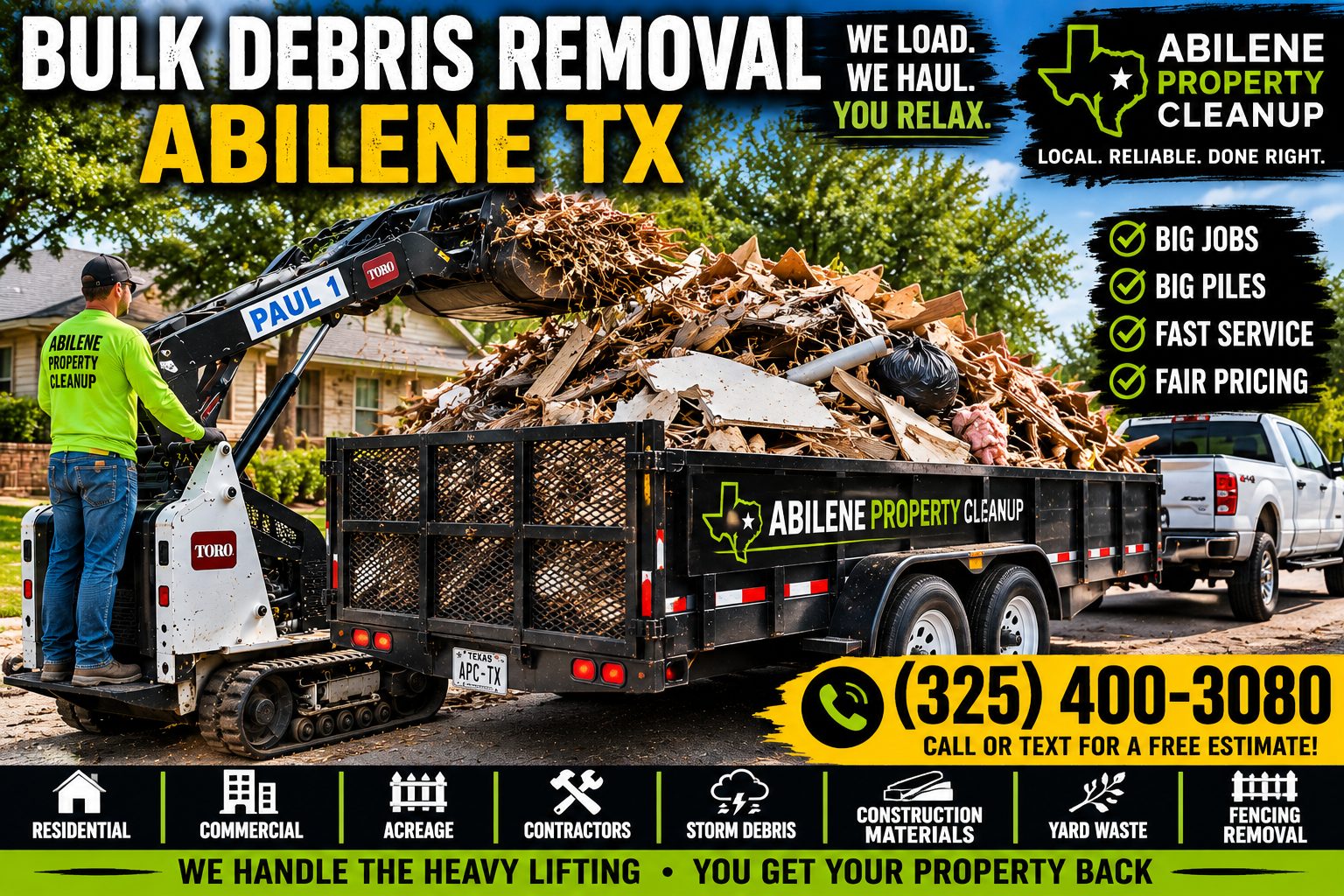
Bulk Debris Removal Abilene TX
Bulk debris removal in Abilene, TX helps homeowners, landlords, property managers, contractors, investors, businesses, and acreage owners remove large amounts of accepted non-hazardous debris that exceed normal curbside collection. We load, haul, and properly dispose of bulky debris from accessible ground-level areas, including renovation debris, construction materials, storm debris, fencing, wood, yard waste, household junk, and mixed debris piles. Pricing depends on the type of material, total volume, weight, accessibility, labor required, disposal fees, and the number of trailer loads.
Large projects often leave behind heavy, bulky, or mixed debris that is difficult to remove without the right equipment and trailer. Renovation projects, rental property cleanouts, estate cleanups, foreclosure cleanups, storm cleanup, and property improvements can quickly create piles that are too large for regular trash collection.
Abilene Property Cleanup provides dependable bulk debris removal throughout Abilene, TX, and surrounding Big Country communities. We handle the loading, hauling, and responsible disposal so you don’t have to move heavy materials yourself. Simply call or text (325) 400-3080 with photos of your debris and a brief description of the project to receive a fast estimate.
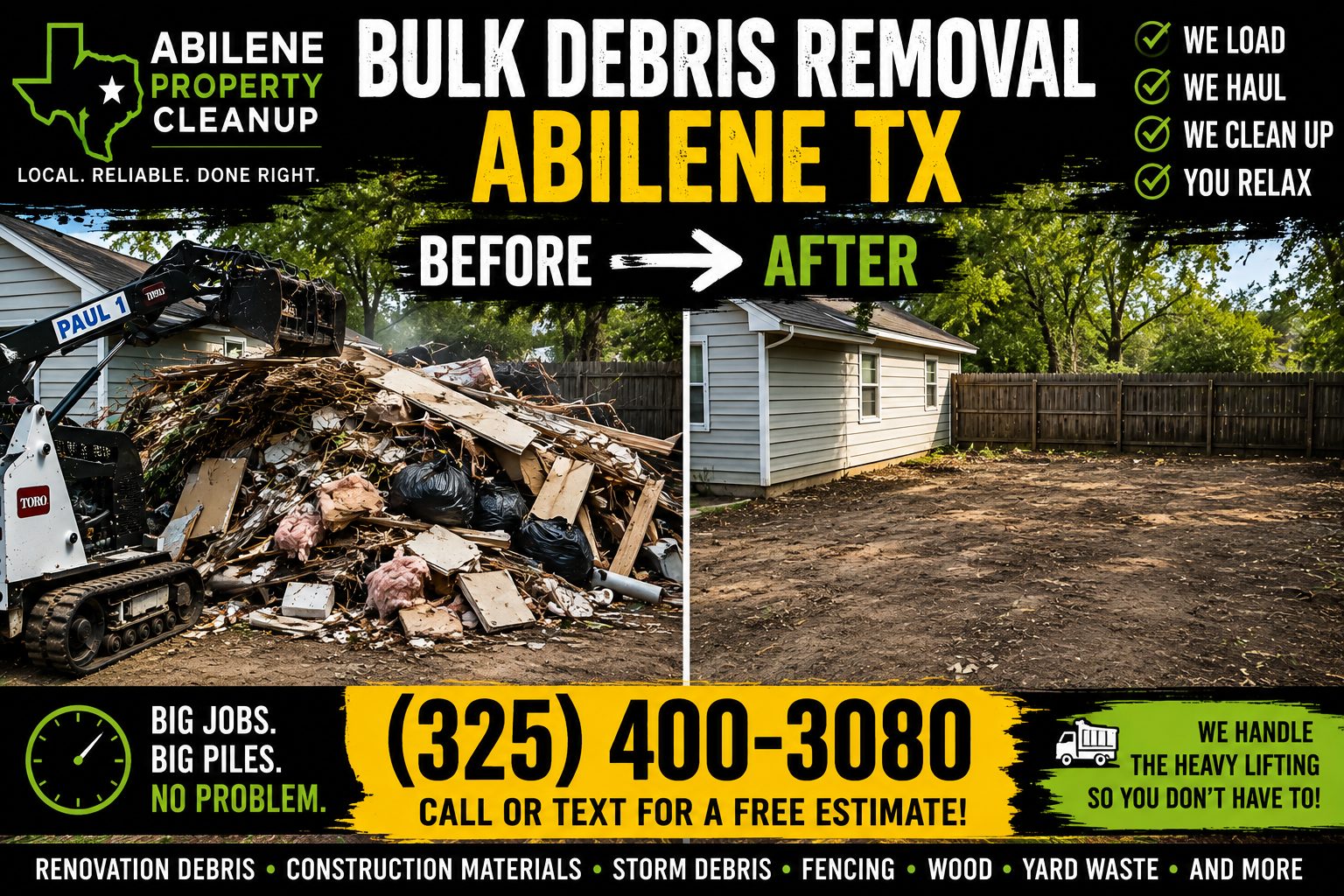
Bulk Debris Removal at a Glance
| Best For | Large property cleanups, estate cleanouts, foreclosure cleanups, rental turnovers, construction cleanup, renovation projects, storm cleanup, and acreage debris removal |
|---|---|
| Typical Materials | Mixed property debris, wood, lumber, fencing, brush, yard waste, renovation debris, household junk, pallets, and other approved bulky non-hazardous materials |
| Loading | We load approved debris from accessible ground-level locations. Customers are not required to move heavy materials themselves. |
| Project Size | One large trailer load or multiple loads depending on debris volume, weight, access, and disposal requirements |
| Pricing | Based on debris type, total volume, weight, labor, accessibility, travel distance, disposal fees, and the number of trailer loads required |
| Service Area | Abilene, Buffalo Gap, Clyde, Merkel, Tye, Hawley, Tuscola, Baird, Potosi, Impact, and surrounding Big Country communities |
Who Uses Bulk Debris Removal
| Customer | Common Need | Typical Debris |
|---|---|---|
| Homeowners | Major decluttering, home improvement, or property cleanup | Mixed household junk, outdoor debris, wood, fencing, and bulky unwanted materials |
| Landlords | Rental property turnover after move-outs, repairs, or tenant cleanouts | Furniture, household trash, wood, fixtures, flooring, and yard debris |
| Property Managers | Multi-area cleanup, maintenance work, and property preparation | Mixed debris from rental units, yards, garages, storage areas, and common spaces |
| Estate Representatives | Remove larger amounts of unwanted material during estate cleanup | Household debris, garage contents, furniture, outdoor items, and general property waste |
| Investors and Realtors | Prepare foreclosures, distressed homes, and investment properties for sale or renovation | Mixed interior debris, exterior cleanup materials, damaged fixtures, and abandoned household items |
| Contractors | Remove debris after remodeling, repairs, and renovation work | Lumber, drywall, flooring, cabinets, fencing, fixtures, and approved construction debris |
| Business Owners | Commercial property cleanup, maintenance, remodeling, or relocation | Pallets, shelving, office cleanout debris, fixtures, wood, and miscellaneous commercial materials |
| Acreage Owners | Clear accumulated debris from rural properties, lots, and larger outdoor areas | Wood, fencing, brush, yard material, pallets, outdoor junk, and bulky debris |
Bulk Debris We Commonly Remove
- Large mixed debris piles
- Bulky household debris
- Construction debris
- Renovation and remodeling scraps
- Wood, lumber, and pallets
- Old fencing and broken fence materials
- Deck removal debris
- Fence demolition debris
- Brush and storm debris
- Yard and property cleanup debris
- Garage cleanout materials
- Shed and storage building cleanout debris
- Rental turnover debris
- Foreclosure cleanup debris
- Estate cleanup materials
- Property maintenance debris
- Moving and cleanout debris
- Outdoor furniture and bulky outdoor items
- Non-hazardous acreage cleanup material
- Approved commercial cleanup debris
Heavy materials such as concrete, brick, rock, dirt, roofing materials, large appliances, masonry, and unusually dense debris may require separate evaluation because trailer weight limits, disposal requirements, loading conditions, and hauling capacity vary by project.
What Is Included
- Photo-based review of the debris pile and property access
- Evaluation of debris type, estimated volume, weight, labor requirements, and disposal needs
- Estimate of the likely number of trailer loads required
- Loading of approved debris from accessible ground-level locations
- Sorting and securing materials for safe transport when necessary
- Hauling debris to an appropriate disposal or recycling facility when applicable
- Final walk-through of the approved work area
- Basic cleanup of loose debris in the agreed loading area
What Is Not Included
- Structural demolition or active tear-out work
- Roof, ladder, elevated, or climbing work
- Hazardous chemicals or hazardous waste
- Medical waste
- Liquid waste
- Biohazard or contaminated material cleanup
- Asbestos testing, handling, or removal
- Large-scale industrial cleanup
- Underground debris excavation
- Excavation, trenching, or grading services
- Standing tree removal
- Oversized heavy-material loads without prior approval
- Unsafe, inaccessible, prohibited, or unidentified debris
Why Customers Choose Bulk Debris Removal
Bulk debris removal saves time, reduces physical labor, and helps large cleanup projects move forward without repeated trips to a landfill or transfer station. Customers often choose professional debris hauling after renovations, estate cleanouts, rental turnovers, foreclosure projects, storm cleanup, acreage cleanup, and major property improvements because large mixed piles can quickly become difficult to sort, load, transport, and dispose of safely.
- No need to rent or tow a trailer
- No repeated disposal-site trips
- No heavy lifting required from the customer
- Large mixed debris piles removed more efficiently
- Loading available for approved ground-level materials
- Suitable for residential, rental, acreage, and commercial properties
- Photo-based estimates available for many projects
- Clear evaluation of weight, access, and disposal requirements
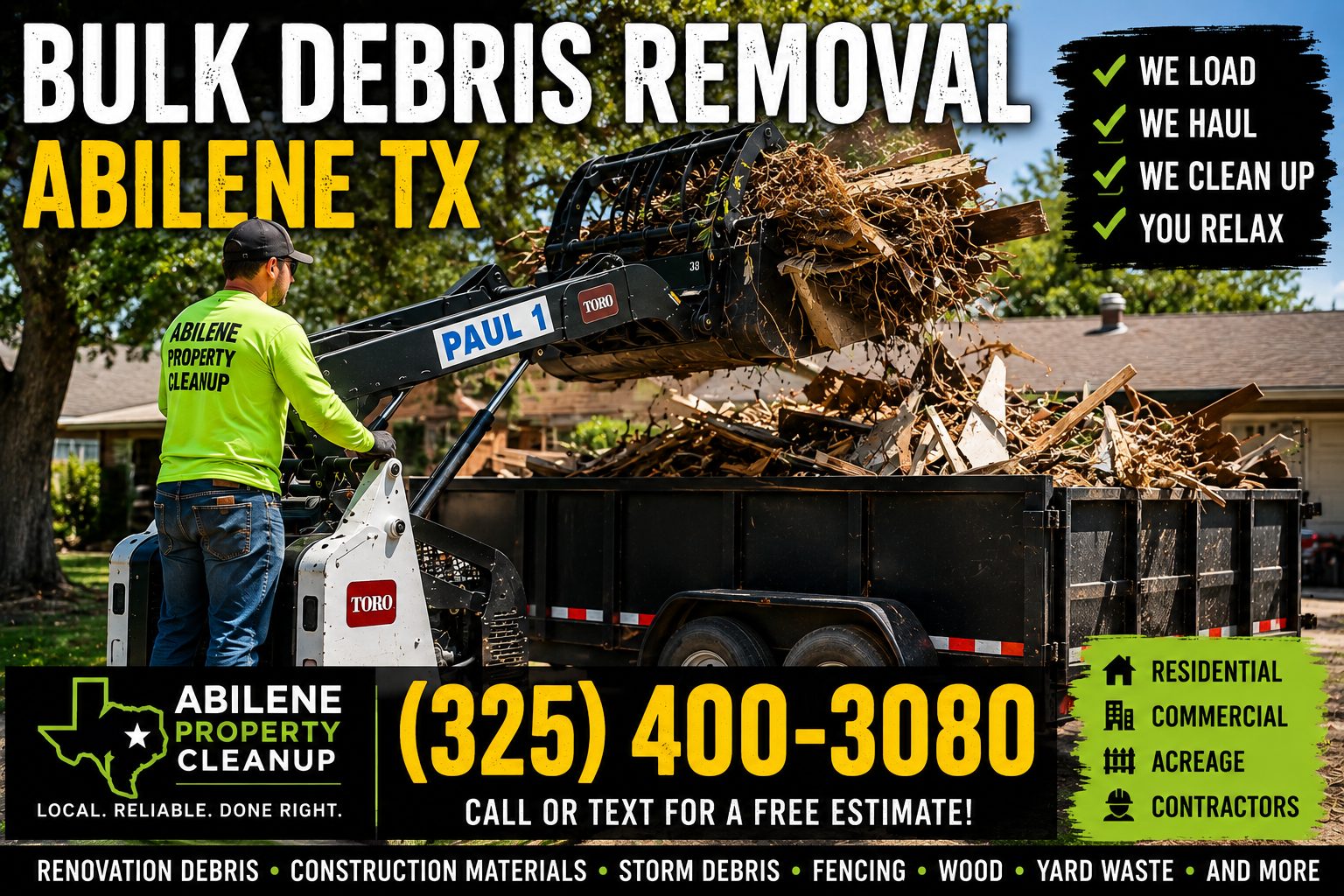
Common Bulk Cleanup Situations
| Situation | Typical Need | Common Debris |
|---|---|---|
| Estate cleanup | Clear unwanted material from multiple rooms, garages, sheds, storage areas, and outdoor spaces | Household debris, furniture, boxes, wood, garage contents, and outdoor items |
| Rental property turnover | Prepare a house, apartment, duplex, or rental property for repairs, cleaning, inspection, or new tenants | Trash, abandoned furniture, flooring, fixtures, appliances, wood, and yard debris |
| Foreclosure cleanup | Remove abandoned, damaged, or accumulated materials before repair, listing, or resale | Mixed interior debris, outdoor junk, broken fixtures, furniture, wood, and property waste |
| Acreage cleanup | Clear large outdoor debris piles from rural properties, lots, fence lines, barns, sheds, and open areas | Wood, fencing, pallets, brush, yard materials, outdoor junk, and bulky debris |
| Post-renovation cleanup | Remove approved debris after remodeling, repairs, upgrades, or property improvement work | Drywall, flooring, trim, cabinets, lumber, fixtures, packaging, and renovation scraps |
| Construction project cleanup | Clear leftover materials after small residential or commercial construction projects | Lumber, pallets, drywall, siding, flooring, fencing, packaging, and approved construction debris |
| Storm debris cleanup | Remove scattered or piled debris after wind, rain, hail, or severe weather | Tree limbs, fencing, wood, roofing pieces, yard debris, and damaged outdoor materials |
| Garage or shed cleanout | Remove accumulated materials from garages, workshops, sheds, and storage buildings | Boxes, shelving, lumber, broken tools, household junk, outdoor equipment, and bulky items |
| Commercial property cleanup | Clear unwanted materials after maintenance, renovation, relocation, tenant turnover, or business closure | Pallets, shelving, office debris, fixtures, packaging, wood, and approved commercial materials |
| Major decluttering | Remove more material than regular trash service or curbside pickup can reasonably handle | Bulky household debris, garage contents, furniture, boxes, outdoor items, and mixed cleanup materials |
How the Bulk Debris Removal Process Works
- Send photos and project details. Call or text photos showing the full debris pile, each cleanup area, the types of materials involved, and the available driveway, gate, or loading access.
- Confirm the cleanup scope. We review the estimated volume, material type, weight, accessibility, labor requirements, likely trailer-load count, disposal needs, and any restricted or unusually heavy materials.
- Receive a preliminary estimate. Many projects can be evaluated using clear photos and an accurate description. The final price may change if the amount, weight, material type, or access differs from the information provided.
- Prepare the property. Group similar materials when practical, bag or box loose debris, separate heavy items, remove hazardous materials, and clear safe loading routes.
- Schedule the service. Availability depends on the size of the cleanup, trailer capacity, disposal-facility hours, weather conditions, travel distance, and existing route schedules.
- Review the work area. Before loading begins, confirm every approved debris pile and identify anything that should remain on the property.
- Load the approved debris. Accepted materials are loaded from the agreed accessible ground-level locations. Additional debris or work areas should be approved before they are added to the project.
- Secure, haul, and dispose. Each load is secured for transport and taken to an appropriate disposal, transfer, or recycling facility when applicable.
- Complete a final walk-through. The approved loading area is reviewed, and basic cleanup of loose remaining debris is performed within the agreed scope.
Bulk Debris Preparation Checklist
| Preparation Step | Why It Matters |
|---|---|
| Show every debris pile in your photos | Helps estimate the total volume, labor, and number of trailer loads more accurately |
| Group debris by material type when practical | Improves estimating, loading efficiency, weight planning, recycling, and disposal decisions |
| Bag or box loose small debris | Reduces loading time and helps prevent lightweight materials from scattering |
| Separate concrete, brick, dirt, rock, roofing, and other heavy materials | Helps evaluate trailer weight limits, disposal requirements, and whether a separate load is necessary |
| Remove hazardous, liquid, medical, or contaminated materials | Prevents rejected loads and avoids unsafe handling or prohibited disposal |
| Drain water from outdoor containers | Reduces unnecessary weight and prevents leaks during loading and transport |
| Clear driveways, gates, sidewalks, and loading paths | Creates safer access for workers, equipment, and the hauling trailer |
| Unlock gates and move vehicles before arrival | Reduces delays and allows the cleanup to begin as scheduled |
| Identify items that must remain | Helps prevent accidental removal of tools, materials, equipment, or personal property |
| Identify every room, yard, garage, shed, or outdoor cleanup area | Reduces missed piles, unexpected additions, and changes to the original scope |
| Disassemble oversized items when requested | May improve loading efficiency and help large items fit safely within trailer capacity |
| Keep children and pets away from the loading area | Helps maintain a safer work zone during loading and equipment operation |
| Send updated photos if additional debris is added | Keeps pricing, labor, trailer capacity, and disposal planning accurate before arrival |
Good preparation can reduce loading time, prevent unexpected disposal problems, and help the project stay within the original estimate. Customers should disclose unusually heavy, sharp, wet, contaminated, or restricted materials before scheduling bulk debris removal.
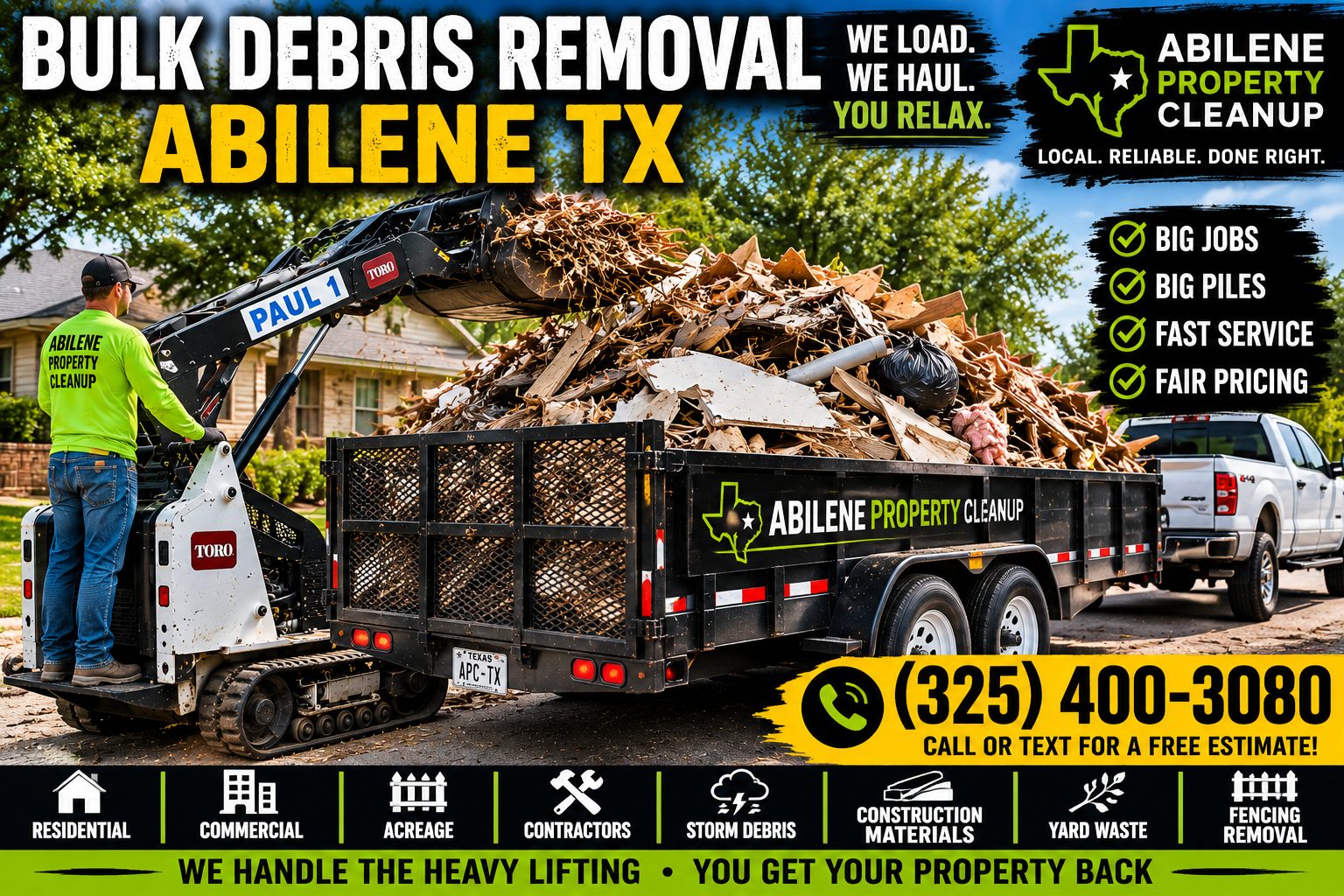

Bulk Debris Removal Pricing Factors
Bulk debris removal pricing is based on the actual amount of work, hauling capacity, and disposal requirements involved in the project. Because debris piles vary widely in size, weight, material type, and accessibility, clear photos and accurate project details are important when requesting an estimate.
Common pricing factors include:
- Total debris volume: The amount of trailer space required is one of the primary pricing factors. Large, lightweight piles may fill a trailer before reaching its weight limit.
- Total material weight: Dense materials can reach trailer capacity even when they occupy less space. Weight is especially important for concrete, brick, dirt, rock, roofing material, wet debris, and other heavy loads.
- Number of trailer loads: Larger property cleanups may require several loading and disposal trips. Each additional load affects labor, travel time, disposal fees, and project duration.
- Material type: Household debris, wood, fencing, yard material, renovation scraps, appliances, and heavy construction materials may have different handling or disposal requirements.
- Disposal requirements: Landfill, transfer-station, recycling, and special-item fees can vary depending on the type and weight of the materials being removed.
- Property access: Driveway width, gates, slopes, soft ground, narrow paths, fences, stairs, and the distance between the debris and trailer can affect loading time.
- Debris preparation: Organized piles are generally faster to evaluate and load than loose, scattered, mixed, or hidden debris.
- Labor required: Pricing may increase when materials must be sorted, carried a longer distance, separated by type, disassembled, or loaded from multiple areas.
- Travel distance: Properties outside Abilene may require additional travel depending on location, fuel use, route time, and disposal access.
- Special handling: Oversized, sharp, unusually heavy, wet, or difficult-to-secure materials may require separate planning or approval.
Photos taken from several angles usually provide the best starting point for a preliminary estimate. Include every debris pile, nearby access routes, gates, driveways, and any heavy or unusual materials. Final pricing may change if the actual volume, weight, material type, or access differs from the information provided.
One Large Load vs Multiple Loads
| Project Type | Typical Condition | Main Planning Concern |
|---|---|---|
| Single bulk load | One organized pile containing lighter mixed debris | Available trailer space, loading time, and material acceptance |
| Heavy single load | A smaller pile containing dense materials such as concrete, brick, dirt, roofing, or wet debris | Trailer weight capacity, axle limits, and disposal requirements |
| Multiple-load cleanup | Several rooms, buildings, piles, or property areas containing a large amount of debris | Total load count, disposal trips, labor time, travel, and scheduling |
| Mixed-property cleanup | Debris located inside the home, garage, yard, shed, acreage, or renovation area | Sorting, access, carrying distance, loading sequence, and material acceptance |
| Multi-material cleanup | Light household debris mixed with wood, fencing, appliances, yard material, or heavy debris | Separating materials to manage weight, disposal fees, and trailer capacity |
| Scattered property cleanup | Debris spread across several outdoor areas, fence lines, barns, sheds, or acreage | Equipment access, ground conditions, travel between piles, and loading efficiency |
A large-looking debris pile does not always require multiple loads, and a smaller pile is not always a single-load project. Lightweight materials are usually limited by trailer space, while dense materials are limited by weight. Photos and an accurate description help determine the most practical loading plan.
DIY Bulk Disposal vs Professional Removal
| Consideration | DIY Disposal | Professional Removal |
|---|---|---|
| Loading | You sort, lift, carry, and load every item or debris pile | Loading is provided for approved debris from agreed accessible ground-level areas |
| Vehicle and trailer | You may need to own, borrow, or rent a suitable truck and trailer | Appropriate hauling equipment is brought to the property |
| Load planning | You estimate volume, weight, trailer capacity, and safe load distribution | The debris type, estimated weight, access, and likely load count are reviewed before scheduling |
| Securing the load | You are responsible for safely containing and securing all materials | Approved materials are secured for transport as part of the hauling service |
| Disposal rules | You must identify which facilities accept each material type | Accepted debris is transported to an appropriate disposal or recycling location when applicable |
| Disposal fees | You pay facility fees directly and may face separate charges for certain materials | Disposal requirements and applicable fees are considered during the project review |
| Travel | You make each trip to the landfill, transfer station, or recycling facility | Hauling and disposal trips are handled through the scheduled service |
| Physical effort | You handle repeated lifting, carrying, loading, unloading, and cleanup | The service reduces the amount of physical labor required from the property owner |
| Time | The project may take several evenings, days, or weekends | The work is completed through coordinated loading and hauling appointments |
| Best Fit | Small, lightweight, organized loads that are easy to transport | Large, bulky, mixed, scattered, heavy, or time-sensitive property cleanups |
Why Professional Bulk Debris Removal Saves Time
Large property cleanups involve more than placing debris into a trailer. Materials must be identified, sorted, staged, loaded, balanced, secured, transported, unloaded, and disposed of according to facility requirements. Heavy or mixed debris may also need to be separated into different loads to prevent overloading and reduce disposal problems.
Professional bulk debris removal combines project review, loading, hauling, transportation, and disposal planning into one coordinated service. This reduces the number of decisions, trips, and physical tasks the customer must handle during the cleanup.
This can be especially helpful for:
- Estate cleanouts with debris in multiple rooms and outdoor areas
- Rental property turnovers with a limited repair or move-in schedule
- Foreclosure cleanups before inspection, renovation, listing, or resale
- Post-renovation cleanup involving wood, flooring, drywall, cabinets, or packaging
- Acreage cleanups with several large or scattered outdoor piles
- Major decluttering projects that exceed normal curbside trash capacity
- Commercial property cleanups involving fixtures, shelving, pallets, or maintenance debris
Coordinating the service in advance also helps customers avoid last-minute landfill trips, trailer rentals, disposal-site confusion, and unexpected delays before a closing, inspection, tenant move-in, contractor arrival, or property listing.
Common Bulk Debris Removal Mistakes
- Underestimating the total volume: Debris often occupies more trailer space after it is lifted, separated, and loaded than it appears to occupy while piled on the ground.
- Underestimating material weight: Concrete, dirt, brick, rock, roofing, wet wood, and other dense materials can exceed trailer weight limits before the trailer is full.
- Mixing hazardous materials with general debris: Chemicals, fuel, paint, medical waste, asbestos-containing materials, and contaminated items can cause a load to be refused.
- Failing to show every debris pile: Estimates may be inaccurate when photos omit rooms, sheds, garages, side yards, fence lines, or additional outdoor piles.
- Taking photos from only one angle: A single photo may hide the true depth, height, material type, or access conditions of the pile.
- Blocking driveways, gates, or loading routes: Vehicles, equipment, locked gates, narrow paths, and other obstructions can increase loading time or prevent access.
- Adding more debris after receiving an estimate: Additional materials can change the price, weight, number of loads, labor requirements, or scheduled service time.
- Mixing heavy debris into a light-material load: Concrete, brick, dirt, roofing, or masonry should be disclosed and separated whenever possible.
- Leaving loose debris uncontained: Small scraps, paper, insulation, and lightweight materials are easier and safer to load when bagged or boxed.
- Failing to identify items that should remain: Tools, lumber, fixtures, equipment, and personal property should be clearly separated from materials being removed.
- Assuming one load will clear the entire property: Whole-property cleanups may require multiple loads depending on volume, weight, material mix, and trailer capacity.
- Waiting until the last minute: Scheduling immediately before a closing, move-in, inspection, contractor deadline, or property listing leaves little room for weather, disposal, or load-count changes.
- Ignoring disposal restrictions: Not every disposal facility accepts every material, and certain items may require advance approval or separate handling.
- Not disclosing difficult access: Long carrying distances, soft ground, steep slopes, stairs, narrow gates, and inaccessible piles can affect labor and equipment planning.
The best way to avoid delays or pricing changes is to provide complete photos, disclose heavy or unusual materials, identify every cleanup area, and report any additional debris before the scheduled service date.

Bulk Debris Removal vs Related Services
| Service | Best For | Key Difference |
|---|---|---|
| Bulk Debris Removal | Large debris piles, whole-property cleanups, and mixed materials that may require one or multiple trailer loads | Designed for larger cleanup projects where debris volume, weight, and hauling logistics are the primary concern |
| General Debris Removal | Smaller residential or commercial debris removal projects | Broad debris removal service for everyday cleanup jobs that typically involve less material |
| Property Debris Cleanup | Vacant homes, neglected properties, foreclosure cleanups, rental properties, and overgrown lots | Focuses on restoring the overall condition and appearance of an entire property rather than removing one debris pile |
| Junk Removal | Furniture, appliances, household junk, office cleanouts, and unwanted personal belongings | Primarily removes unwanted items rather than construction, renovation, or large mixed debris loads |
| Construction Debris Removal | Building projects, remodeling, contractor cleanup, and demolition debris | Specialized for construction materials such as lumber, drywall, flooring, pallets, siding, and job-site debris |
| Renovation Debris Removal | Kitchen remodels, bathroom renovations, flooring replacement, cabinet removal, and interior remodeling | Designed specifically for debris generated during residential or commercial renovation projects |
| Concrete Debris Removal | Broken concrete, sidewalks, patios, driveways, foundations, and masonry cleanup | Focused on heavy debris that requires special planning because of trailer weight limits and disposal requirements |
| Wood Debris Removal | Lumber, fencing, pallets, decking, and wood from remodeling or outdoor projects | Specializes in hauling wood-based debris generated during cleanup, repairs, and demolition work |
| Commercial Debris Removal | Businesses, offices, retail spaces, warehouses, and commercial property maintenance | Handles debris removal projects generated by commercial operations, maintenance, and tenant improvements |
Bulk Debris Removal Across Abilene and the Big Country
Abilene Property Cleanup proudly provides bulk debris removal throughout Abilene and surrounding Big Country communities. Whether the debris is located at a home, rental property, commercial property, acreage, or construction site, we evaluate each project based on debris volume, accessibility, trailer capacity, disposal requirements, and travel distance.
We regularly serve customers throughout Abilene, including areas near South 14th Street, South 27th Street, South 1st Street, North 1st Street, Buffalo Gap Road, Antilley Road, Sayles Boulevard, Judge Ely Boulevard, Ambler Avenue, Industrial Boulevard, FM 707, FM 1750, Oldham Lane, Loop 322, Highway 277, Winters Freeway, Downtown Abilene, the Wylie area, Dyess Air Force Base, Cedar Creek, Chimney Rock, Elmwood, Red Bud, River Oaks, and nearby neighborhoods.
Service is also available in Buffalo Gap, Potosi, Tye, Clyde, Merkel, Hawley, Tuscola, Baird, Impact, Taylor County, and many surrounding Big Country communities. Larger projects outside Abilene are scheduled based on travel distance, debris volume, trailer capacity, route planning, and disposal logistics.
Why Choose Abilene Property Cleanup
- Locally owned and focused on serving Abilene and surrounding Big Country communities
- Fast photo-based estimates available for many bulk debris removal projects
- Honest evaluation of debris volume, material type, weight, property access, labor requirements, and trailer-load count
- Ground-level loading of approved debris so customers are not required to move heavy materials themselves
- Suitable for residential, commercial, rental property, estate, foreclosure, renovation, contractor, and acreage cleanup projects
- Clear communication regarding accepted materials, disposal requirements, unusually heavy loads, and restricted items before scheduling
- Dependable scheduling with practical solutions for both single-load and multi-load cleanup projects
- Professional hauling using equipment suited for large debris removal throughout the Abilene area
- Committed to providing reliable service, straightforward communication, and efficient cleanup from the initial estimate through final hauling and disposal
If you have a large debris pile, mixed cleanup materials, or a property that requires multiple trailer loads, call or text (325) 400-3080. Send a few clear photos of the debris and a brief description of the project, and we’ll review the cleanup, discuss the best removal approach, and provide a preliminary estimate for your bulk debris removal project.
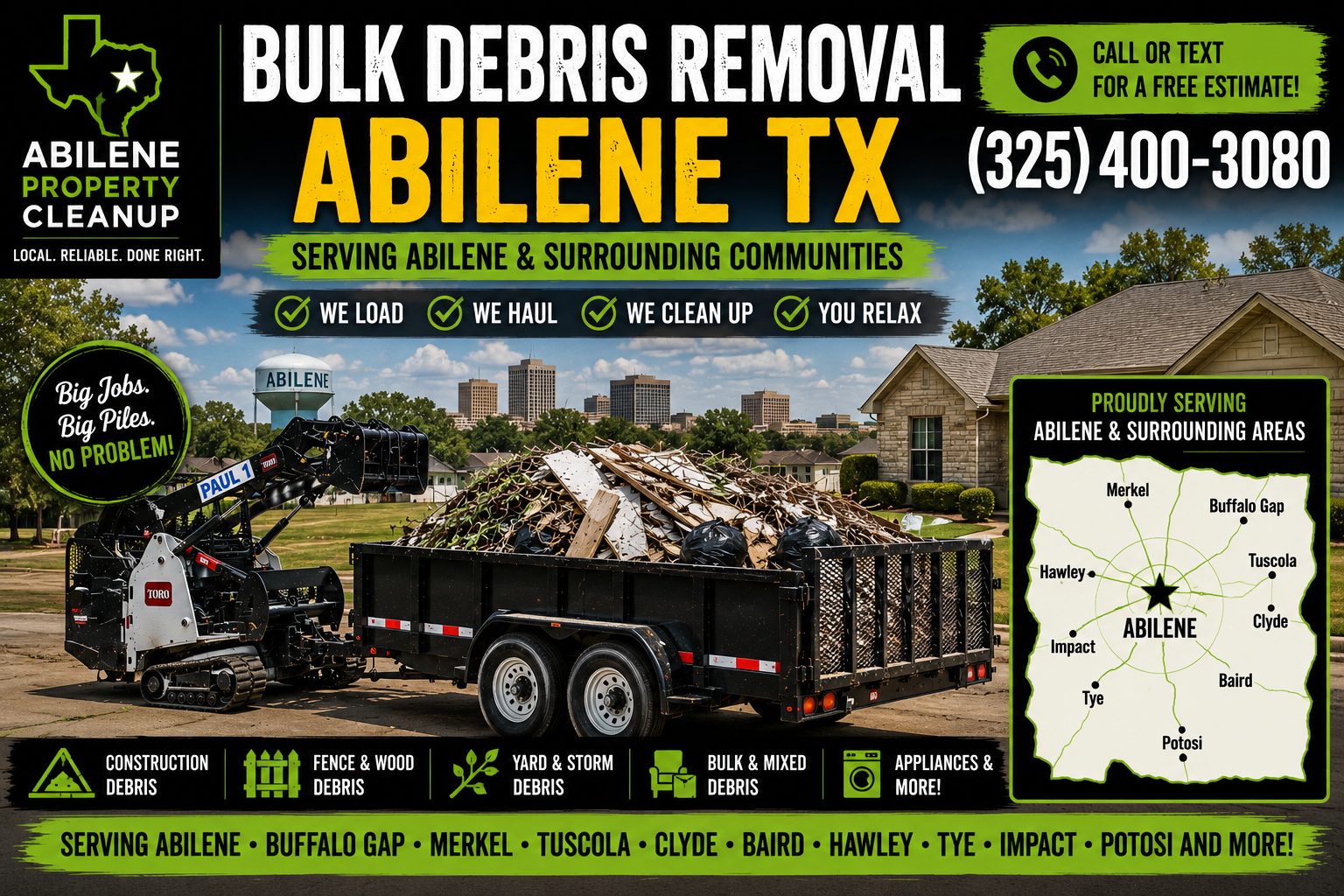
Frequently Asked Questions About Bulk Debris Removal
What types of bulk debris do you remove?
Abilene Property Cleanup may remove large amounts of accepted non-hazardous debris, including mixed property debris, wood, lumber, pallets, old fencing, bulky household debris, yard materials, garage cleanout debris, renovation scraps, construction materials, storm debris, and other approved cleanup materials. Final acceptance depends on the material type, total volume, weight, accessibility, disposal-facility rules, and site conditions.
What counts as bulk debris removal?
Bulk debris removal is intended for large piles, bulky materials, or mixed cleanup loads that exceed normal curbside trash capacity. It is commonly used for estate cleanouts, rental turnovers, foreclosure cleanup, acreage cleanup, major decluttering, property improvement projects, garage and shed cleanouts, storm cleanup, and post-renovation debris removal.
Do you load and haul the debris?
Yes. For approved projects, the service generally includes loading accepted debris from agreed accessible ground-level areas, securing the materials for transport, hauling the load away, and delivering it to an appropriate disposal, transfer, or recycling facility when applicable.
Do I need to move the debris to the curb?
Not always. Approved debris may be loaded from driveways, garages, yards, curbside areas, sheds, and other accessible ground-level locations. Long carrying distances, narrow gates, stairs, soft ground, steep slopes, blocked pathways, or difficult access may affect the scope, labor requirements, and price.
Can you remove debris from inside a house or building?
Interior removal is evaluated individually. The best-fit projects usually have a safe, clear, ground-level route between the debris and the loading area. Debris staged in a garage, driveway, yard, curbside area, or near an accessible exterior entrance is generally easier to evaluate and remove than material located upstairs, in attics, on roofs, or behind unsafe obstructions.
How should I prepare a large debris pile?
Group similar materials together when practical, bag or box loose small debris, separate concrete and other heavy materials, remove hazardous items, drain water from containers, unlock gates, move vehicles, and clear the loading route. Clearly separate anything that should remain on the property. Send updated photos if the amount or type of debris changes before service.
How is bulk debris removal priced?
Bulk debris removal pricing depends on the type of material, total volume, estimated weight, number of trailer loads, carrying distance, property access, labor, travel, disposal fees, and any special handling requirements. Large lightweight piles are often limited by trailer space, while concrete, brick, dirt, roofing, and other dense materials may be limited by weight.
Can I get a bulk debris removal estimate from photos?
Yes. Many projects can be reviewed using clear photos and an accurate description. Send wide photos showing the entire debris pile, close views of the different materials, and pictures of the driveway, gate, pathway, or loading route. For large cleanups, include every room, garage, shed, yard area, and separate pile, along with approximate measurements when possible.
Is a photo estimate the final price?
A photo-based estimate is based on the information provided before the appointment. Pricing may change if the actual volume, weight, material type, access conditions, labor requirements, or number of cleanup areas differs from the photos and description. Additional debris should be disclosed before the scheduled service date.
Can one large cleanup require multiple trailer loads?
Yes. Whole-property cleanups, estate projects, rental turnovers, foreclosure cleanouts, acreage cleanup, and mixed construction debris may require more than one load. The number of loads depends on trailer volume, legal weight capacity, debris density, material separation requirements, and disposal-facility rules.
Why can a small debris pile still count as a heavy load?
Dense materials can reach trailer weight limits before using all available trailer space. Concrete, brick, dirt, rock, tile, shingles, masonry, wet wood, and similar materials may require smaller or separate loads even when the pile does not appear large.
Do you offer same-day bulk debris removal?
Same-day service may be available in limited situations, but it is not guaranteed. Larger cleanups require enough trailer capacity, loading time, route availability, disposal-facility access, and safe working conditions. Sending complete photos early improves the ability to evaluate scheduling options.
How long does bulk debris removal take?
Project time depends on the amount of debris, material weight, property access, preparation, loading distance, number of areas, and number of disposal trips required. A single organized pile may be completed more quickly than a scattered whole-property cleanup involving several buildings or multiple trailer loads.
What materials are not accepted?
We do not accept asbestos, hazardous chemicals, solvents, fuels, explosives, medical waste, biohazard materials, unknown liquids, contaminated debris, pressurized containers, radioactive materials, or anything prohibited by the receiving disposal facility. Paint, batteries, tires, refrigerants, roofing materials, electronics, and other regulated items may require separate review before approval.
Can you remove concrete, brick, dirt, or other heavy materials?
Heavy debris is evaluated separately because weight limits and disposal requirements differ from ordinary bulk cleanup materials. Broken concrete, brick, dirt, rock, tile, roofing, masonry, and similar materials must be disclosed in advance and may need to be separated from lighter debris.
Do you remove appliances and furniture with bulk debris?
Furniture and some appliances may be accepted as part of an approved mixed cleanup, but large appliances, refrigerators, freezers, air-conditioning equipment, and unusually heavy items require advance disclosure. Certain items may have special handling or disposal fees.
Can you remove storm debris?
Accepted storm debris may include fallen limbs, fencing, wood, yard debris, damaged outdoor materials, and other non-hazardous ground-level debris. We do not perform roof work, climbing, standing-tree removal, utility work, or hazardous storm cleanup.
Do you provide demolition or tear-out services?
No. Bulk debris removal covers hauling debris that has already been removed, dismantled, or staged for pickup. Structural demolition, active tear-out, roofing removal, excavation, grading, and elevated work are not included unless specifically stated in the approved project scope.
Do you serve areas outside Abilene?
Availability may extend to Tye, Potosi, Buffalo Gap, Clyde, Merkel, Tuscola, Baird, Hawley, Impact, Taylor County, and nearby Big Country communities. Projects outside Abilene are evaluated based on location, travel time, job size, expected load count, route planning, and disposal requirements.
What is the difference between bulk debris removal and junk removal?
Bulk debris removal focuses on large piles, mixed property debris, renovation scraps, wood, fencing, yard materials, and cleanup loads that may require multiple trips. Junk removal in Abilene more often focuses on unwanted furniture, appliances, household belongings, office items, and general personal property.
What is the difference between bulk debris removal and construction debris removal?
Bulk debris removal may include many types of mixed cleanup material from a property. Construction debris removal is specifically focused on materials generated by building, remodeling, demolition, repair, and contractor projects, such as lumber, drywall, flooring, siding, pallets, and fixtures.
What information should I send when requesting service?
Send your name, property location, clear photos of every debris pile, close views of the materials, and pictures of the loading route. Mention concrete, brick, dirt, roofing, appliances, wet debris, stairs, narrow gates, soft ground, multiple buildings, long carrying distances, acreage access, or anything else that could affect loading and disposal.
Related Debris and Cleanup Services
Bulk debris removal may overlap with several related services. The best service depends on the type of material, project size, property condition, and whether the cleanup involves household junk, construction materials, heavy debris, storm damage, or an entire property.
- General debris removal in Abilene for smaller or broader mixed cleanup projects
- Construction debris removal for lumber, drywall, flooring, siding, pallets, and job-site materials
- Residential debris removal for homes, garages, yards, sheds, and household properties
- Commercial debris removal for businesses, offices, retail spaces, rental properties, and commercial sites
- Property debris cleanup for vacant, neglected, distressed, rental, and foreclosure properties
- Storm debris removal for accepted ground-level debris left by wind, rain, hail, and severe weather
- Concrete debris removal for broken concrete and other approved heavy materials
- Wood debris removal for lumber, fencing, pallets, decking, and wood cleanup
- Renovation debris removal for kitchen, bathroom, flooring, cabinet, and remodeling projects
- Junk removal in Abilene for furniture, appliances, household items, office contents, and unwanted belongings
Schedule Bulk Debris Removal in Abilene
To request bulk debris removal, send clear photos of every debris pile, close views of the materials, and pictures of the driveway, gate, pathway, or loading route. Include all rooms, garages, sheds, yards, fence lines, and outdoor areas that are part of the cleanup.
Mention any concrete, brick, dirt, roofing, appliances, wet materials, sharp debris, stairs, narrow gates, blocked access, soft ground, multiple buildings, long carrying distances, or acreage conditions that may affect the work. Complete information helps determine material acceptance, trailer capacity, likely load count, labor requirements, and disposal planning.
Call or text (325) 400-3080 to discuss your bulk debris removal project in Abilene or a nearby Big Country community. After reviewing the photos and project details, Abilene Property Cleanup can explain whether the cleanup fits the service, identify any materials that require separate evaluation, and discuss the next available scheduling option.